|
March is National Read-In Month, a time to celebrate the transformative power of literacy. Malcolm X famously said, "Education is our passport to the future." His own journey from criminal to intellectual leadership exemplifies the profound impact of literacy, particularly for Black communities. In The Autobiography of Malcolm X as told to Alex Haley, we learn that through the encouragement of Brother Baines in prison, Malcolm X was led to the library, where he devoured books on history, philosophy, and politics. This self-directed learning shaped his worldview, allowing him to see himself outside of the narrow, oppressive narratives imposed upon Black people. Today, this lesson remains as relevant as ever—particularly when it comes to the books available to our children.
Children's literature plays a critical role in the psychological development of Black youth. Seeing oneself reflected in stories fosters confidence, identity affirmation, and a sense of belonging. Yet, in an era when book bans are disproportionately targeting Black authors and stories, we must ask ourselves: How are we ensuring that our children have access to literature that affirms their history, beauty, and achievements? The Power of Representation in Children's Literature Dr. Rudine Sims Bishop's concept of "Mirrors, Windows, and Sliding Glass Doors" highlights how books can reflect a child's identity, provide insight into others' lives, and transport readers into new experiences. Historically, Black children have been denied these mirrors. The lack of representation in children's literature has long sent a message that their stories, culture, and histories are unimportant. Fortunately, the number of diverse books written by Black authors has increased in recent years, according to data from the Cooperative Children's Book Center at the University of Wisconsin-Madison. Books like Crown: An Ode to the Fresh Cut by Derrick Barnes, The Undefeated by Kwame Alexander, and Hair Love by Matthew A. Cherry celebrate Black joy, identity, and resilience. These books tell stories of self-love and history, reinforcing the pride that Malcolm X so fiercely advocated. Diverse literature has grown considerably in the past few years, with more books detailing the Black experience in all its richness and complexity. Authors are expanding the narratives beyond struggle and resistance to include stories of joy, adventure, fantasy, and everyday life. Books such as Tristan Strong Punches a Hole in the Sky by Kwame Mbalia and Amari and the Night Brothers by B.B. Alston showcase Black protagonists in fantastical settings, while The Year We Learned to Fly by Jacqueline Woodson and Born on the Water by Nikole Hannah-Jones provide historical and cultural depth. This expanding range of storytelling allows Black youth to see themselves as heroes, dreamers, and leaders across multiple genres. Malcolm X once asked, "Who taught you to hate the color of your skin? Who taught you to hate the texture of your hair? Who taught you to hate the shape of your nose and the shape of your lips? Who taught you to hate yourself from the top of your head to the soles of your feet?" The answer to countering that hatred is representation and affirmation in books. Titles such as I Am Enough by Grace Byers, illustrated by Keturah A. Bobo, Being You by Alex Pate, illustrated by Soud, The Me I Choose to Be by Natasha Tarpley, Art by Regis and Kahran Bethencourt, I Am Every Good Thing by Derrick Barnes, I Am Loved by Nikki Giovanni, illustrated by Ashley Bryan, and Black Enough: Stories of Being Young & Black in America by Ibi Zoboi provide children with narratives that celebrate their existence. Young adult books like Akata Witch by Nnedi Okorafor, Call Us What We Carry by Amanda Gorman, The Hate U Give by Angie Thomas, I Rise by Marie Arnold, and Stamped: Racism, Antiracism and You by Jason Reynolds and Ibram X. Kendi further equip young readers with knowledge, empowerment, and historical understanding. The Rise of Book Bans: Silencing Black Voices Despite this progress, we are witnessing a troubling resurgence in book bans, with many of the targeted works written by Black authors or featuring Black protagonists. According to PEN America, book bans have increasingly focused on stories about race, identity, and history—subjects that are vital for Black children to see and understand. The same systemic suppression that once sought to keep Malcolm X from knowledge is now being applied to limit what Black youth can learn today. The banning of books like Stamped: Racism, Antiracism, and You by Jason Reynolds and Ibram X. Kendi and The Hate U Give by Angie Thomas reflects a broader fear of Black consciousness and empowerment. Just as The Autobiography of Malcolm X has faced repeated censorship for supposedly being "disruptive to racial harmony," contemporary Black children's literature is being erased under the guise of "protecting" young readers. Reimagining Community Literacy and Relationship Building If books are being removed from schools and public libraries, where can our children turn? We must reclaim literacy by embedding Black literature into the very fabric of our communities. Barbershops, beauty salons, churches, and social clubs can become safe havens for Black storytelling. These spaces have historically been centers of cultural exchange, and stocking them with books that celebrate Black history and identity ensures that our children have access to stories that affirm their experiences. Public libraries remain one of the most crucial resources for community literacy. Libraries serve as "the people’s university," providing free access to books, technology, and learning resources. However, systemic barriers—including funding cuts, content restrictions, silent censoring, and the underrepresentation of Black librarians—threaten their ability to serve our communities. We must advocate for our libraries, demand diverse collections, and create independent community libraries where necessary. Literacy as Liberation Malcolm X’s path to literacy was one of self-determination. While incarcerated, he taught himself to read and critically analyze the world around him. His intellectual awakening was rooted in books—many of which challenged mainstream historical narratives. How are we cultivating this same spirit of inquiry and empowerment in our children today? Are we ensuring that they have access to stories that teach them about the Harlem Renaissance, the Tuskegee Airmen, the brilliance of Black LGBT authors like James Baldwin and Audre Lorde, or the contributions of Black women in STEM? Culturally responsive education—rooted in diverse histories, perspectives, and storytelling—has been shown to increase reading motivation and engagement among Black youth. When children see themselves as heroes, inventors, and leaders in the books they read, they internalize a sense of possibility. Research consistently shows that students who engage with culturally relevant texts perform better academically and develop stronger literacy skills. Fighting for the Future Malcolm X understood that literacy was a form of power. Today, we face a renewed battle to control narratives, limited access to information, and the erasure of Black voices from education. We cannot afford to be passive in this fight. Parents, educators, librarians, researchers, and community leaders must come together to protect and promote Black literature. The question remains: As our books are suppressed, how are we raising up libraries, community literacy, and other literacy spaces in response? How are we guiding our children to reading or to the library, just as Brother Baines guided Malcolm X? Malcolm X's legacy demands that we take literacy into our own hands and ensure that Black youth continue to see their stories, their history, and their beauty reflected in the books they read. If education is our passport to the future, then let us ensure that every child in our community has one.
0 Comments
A Boy And His Mirror is by 1st-time author and actor Marchant Davis. Chris, the main character, is judged by his hair and looks for a way to be accepted at school.
He asks his mirror for advice. Through his mom's support and the wisdom of his conversation with the mirror, he learns a strategy to communicate with his peers at school to understand who he is. This book will help provide a conversation about self-acceptance, empathy, and friendship. This book also relates to Black boys who like to have long hair. With the recent happenings of the Tennessee 3, #tn3 , Peabody Library wanted to present the use of resources to draw comparisons in helping young people understand current events.
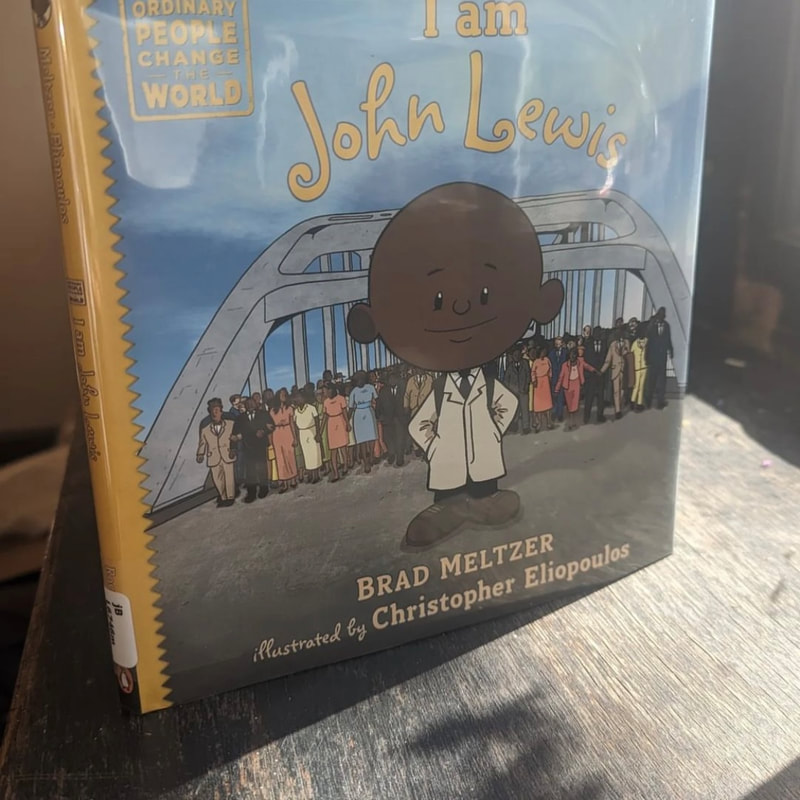
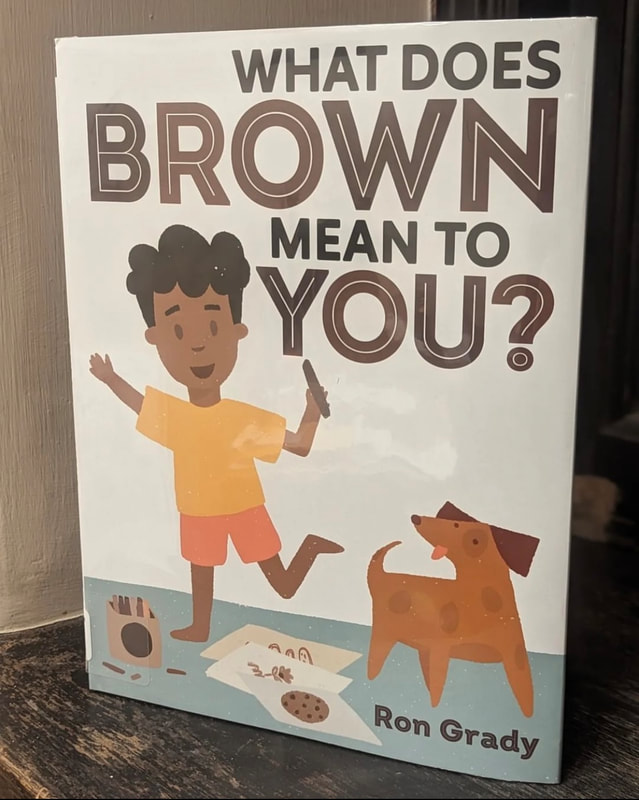
One example is Brad Meltzer's book 'I am John Lews'. It is a fantastic book to understand civil rights, advocacy, discrimination, and using your voice for #goodtrouble. The biography uses a picture book/comic approach detailing Lewis' upbring, influences, and courageous actions as he grew in the movement to promote humanity. This picture book, by preschool teacher, Ron Grady, shows love to all things brown. Showing scenes from family to nature this book, told in lyrical text, celebrates shades of brown to ensure children feel encouraged in seeing their brown selves as beautiful!
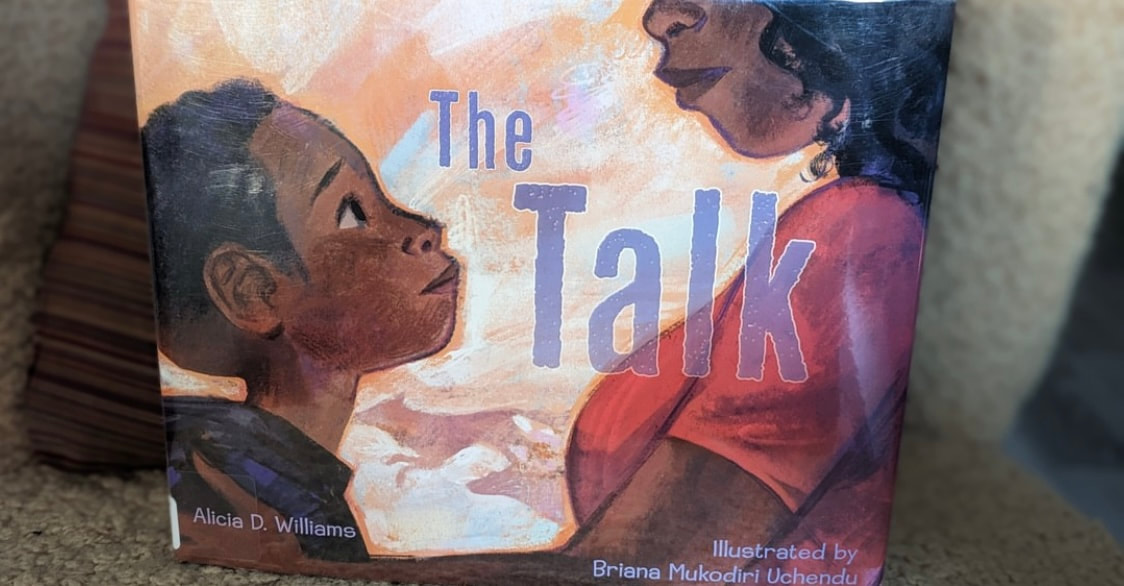
Written by Alicia D. Williams and Illustrated by Briana Mukodiri Uchendu, this title shares the moments many Black and Brown parents and guardians experience with their children in order to keep them safe in spaces.
According to the American Psychological Association (APA) research, “Black boys as young as 10 may not be viewed in the same light of childhood innocence as their white peers, but are instead more likely to be mistaken as older, be perceived as guilty and face police violence if accused of a crime." . Williams shows the humanity and nature of a young boy Jay, the main character, and his friends as they play. Also shown is the adultification and scrutiny Black and Brown children face based on negative stereotypes and perceptions. The author masterfully intertwines the family's affirmation of Jay as a growing child with everyday interests and joy in contrast to protecting him from a racialized environment he should not have to navigate in a racialized. Muodiri Uchendu's illustrations reflect the visual comparisons represented in the storyline. The playfulness and warmth of the family, neighborhood, and friends embody the humanity supporting the major themes of the story. This book provides a sensitive introduction to a difficult topic. Our content focuses on ensuring young Black males have a positive literacy and literary experience. Follow us and suggest our profile to others who would be interested. Carole Boston Weatherford & Rob Sanders co-author the book, A Song For The Unsung: Bayard Rustin, the Man Behind the 1963 March on Washington. This title details Bayard's early life, including his family's Quaker influence, the difficulty in positioning him as a gay man within the Civil Rights Movement, and his credit as an instrumental player organizing the March on Washington & the 10 Demands.
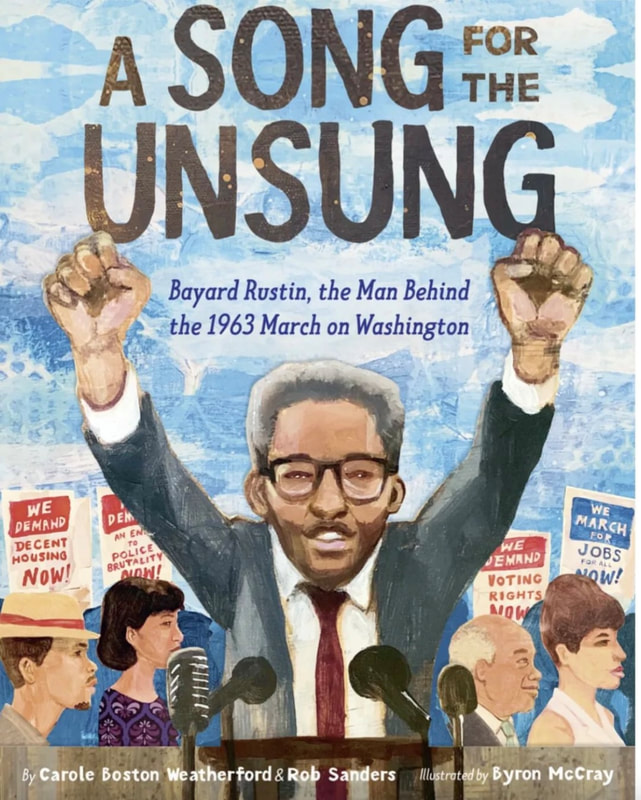
Carole brilliantly incorporates freedom spirituals throughout the story. The brave storytelling is an affirming narrative in children's literature. This is a picture book. I would suggest this for upper elementary through high school. With LGBTQ discrimination, one has to be prepared to teach intersectionality and the humanity of Bayard Rustin. This book will help in the discussion of honoring one's civil rights. Beautiful illustrated by Byron McCray using acrylics, newspaper and sheet music. This picture book, Carter G Woodson Reads the Paper is a book focusing on his desire to go to school and documenting his desire to prove Black History exists .
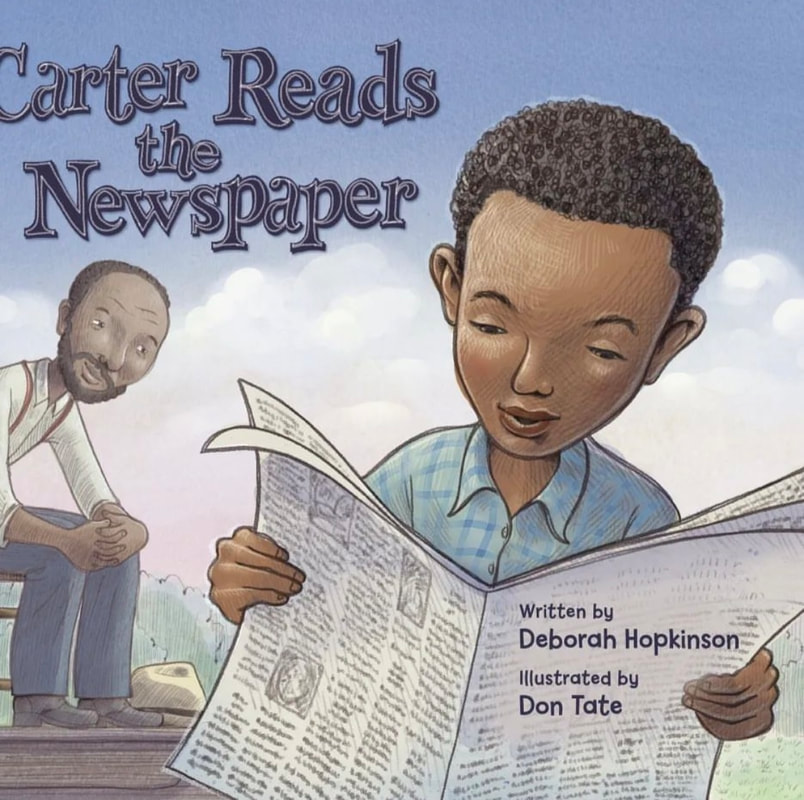
This illustrations are bright and appealing. His story is beautifully detailed.The theme of perseverance is shown as he places such a high value on education and reading. Also, the theme of validating Black History is highlighted in this book Fun fact from this book... Did you know that Dr. Carter G Woodson was the first Black person whose parents had been enslaved to receive a doctorate degree from Harvard University? My only suggestion with this title, is to introduce terms enslaved and enslaver for terms like slave and master to provide value of the actions and positions. Originally published in 2018, this book is very relevant as a text to have conversations around the social justice issues of today.
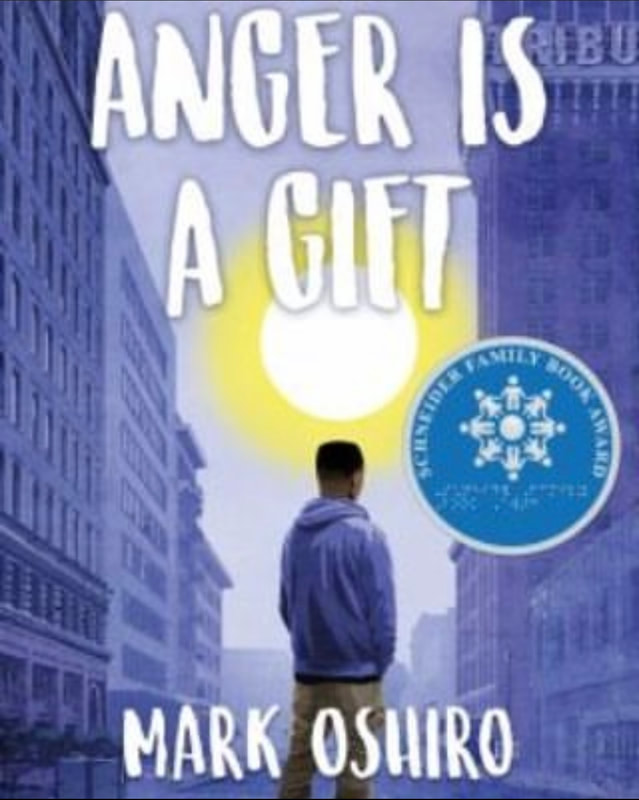
Moss Jefferies, an Oakland teen, who's father died at the hands of the police. After his friend faces brutality from high school security, Moss' participation in a school protest brings his past to the present. Topics in this story include sexual orientation, gender identity, religion, race, police brutality, immigration and ethnicity. A very engaging text for young adults. This award-winning book is a great recommendation for teens and youth book clubs. Pele, King of soccer.
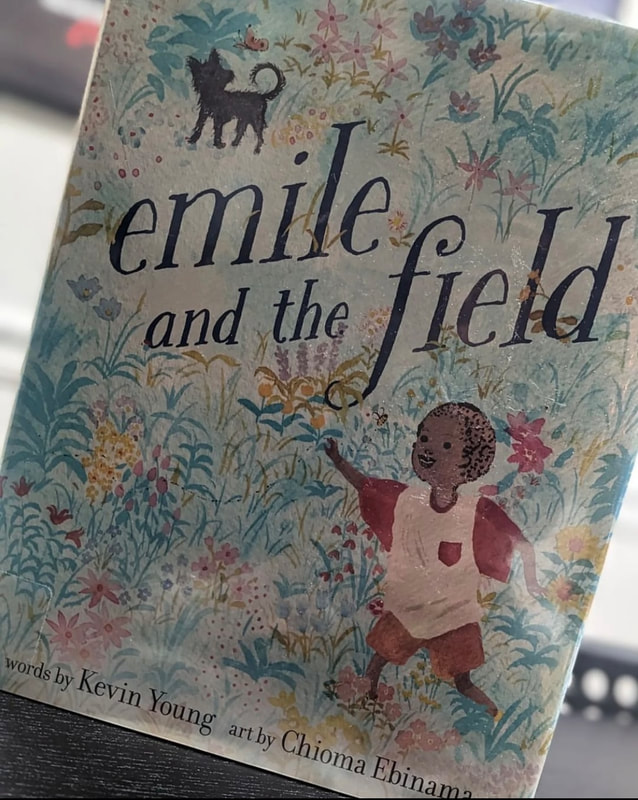
Written by poet Kevin Young and beautifully illustrated by Chioma Ebinama, this story shares the relationship a young Black boy has with the neighborhood fields and nature around him.
The book provides a sense of wonder and sense of place in nature. The water color and ink illustrations reflect Emile's reverence for the natural world around him. A fresh, rare story of a young Black male defining his place outside of an urban landscape. |
AuthorSWE ARE HERE will provide you book reviews, discussions, news, and programming about literature and literacy by and about Black males. This site will also feature vlog conversations on topics related to the promoting literacy and voice for Black boys and young men. Archives
March 2025
Categories
All
|
RSS Feed